Ansi Lumens Vs Marketing Lumens Bedroom Projector Uk
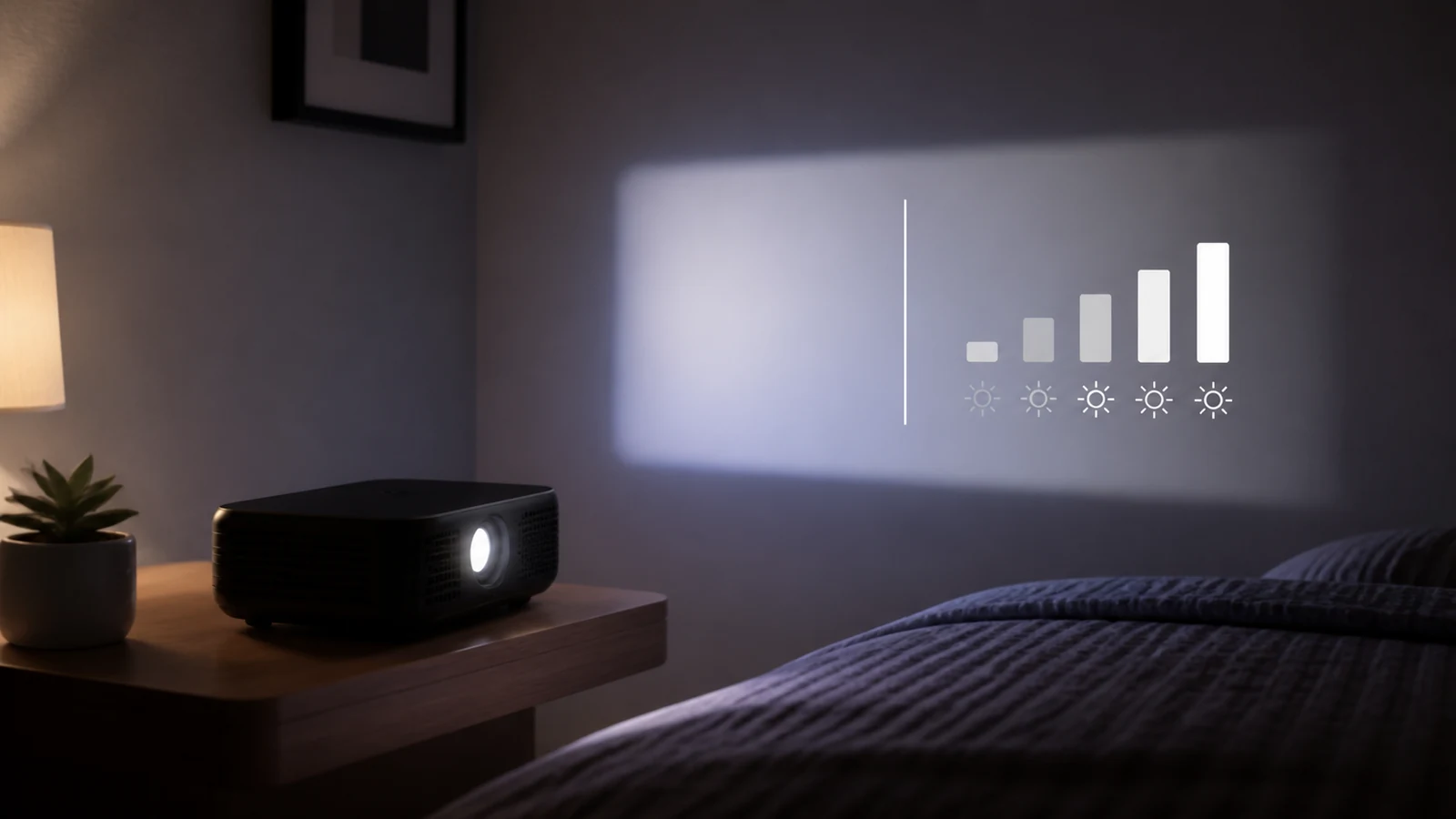
Direct answer: for a bedroom mini projector, treat a bare “lumens” number as weak evidence until the listing says what kind of lumens it means. ANSI lumens are the cleanest comparison point because they describe measured brightness from the projected image, while LED, light-source and vague marketplace figures can make cheaper projectors look brighter than they feel in a dark UK bedroom.
Why this matters in a small bedroom
Most under-£100 projector searches show dramatic brightness numbers. That works because a bigger number feels safer, especially if you are worried about thin curtains or a grey wall. The practical question is simpler: will the picture look comfortable at night, in your real room, at the image size you can actually fit?
BenQ separates ANSI, LED and light-source lumen language and shows why the numbers are not interchangeable: BenQ’s ANSI, LED and light-source lumen guide.
Five checks before buying
- Find the unit label. Look for ANSI first; treat LED or light-source figures as a different unit.
- Be suspicious of lonely numbers. “Lumens”, “L” or a huge number without method is not like-for-like evidence.
- Match the room. A dark bedroom after sunset is a different job from a daytime open-plan lounge.
- Keep image size realistic. The bigger the image, the more the same light is spread out.
- Screenshot before paying. Save brightness wording, native resolution and returns terms.
When to proceed
Proceed only if your normal use is evening films, you can control light, and the listing is honest about what brightness unit it uses. Walk away if you need TV-like daytime viewing with curtains open. If the room, brightness language and resolution all still fit, HomeProje’s HY300 page is relevant as a candidate to check, not as a generic answer: check the current HY300 product details.
For the next technical check, read native vs supported resolution in projector listings.